
Published 2026-03-11 — Updated on 2026-06-09
Keywords
- Chinese rock,
- Cui Jian,
- Communism,
- Yaogun,
- Repression
How to Cite
Copyright (c) 2026 Diego Omar Cervantes Ramírez

This work is licensed under a Creative Commons Attribution 4.0 International License.
Abstract
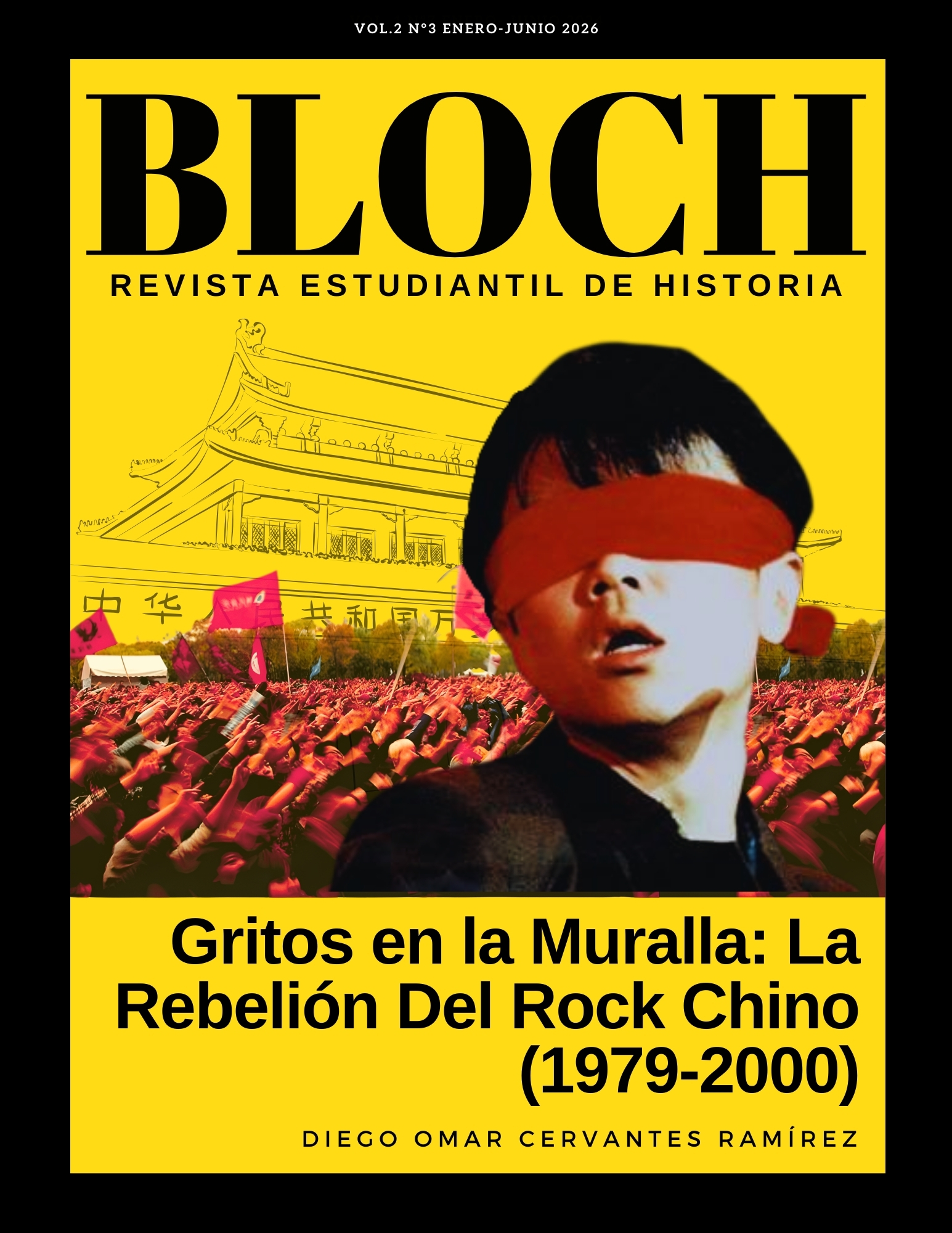
In the late 1970s and throughout the 1980s, an artistic revolution began in China. With the participation of many young people, rock music became a banner of resistance against the government, which opposed any Western influence. Both artists and followers of the movement experienced various forms of censorship, ranging from the limited or nonexistent availability of musical material to the cancellation of performances. Despite constant repression from the Chinese government, rebellious youth managed to consolidate a solid music scene within working-class neighborhoods across the country, where artists and bands such as Cui Jian, Dou Wei, Tang Dynasty, and Black Panther stand out, among others. This paper seeks to compile and examine a musical scene that is relatively unknown in the Western world, while also analyzing this movement through several key questions: What happened for rock to become a poorly regarded genre in China? What actions did high-ranking authorities take to repress this movement? What type of censorship did young rock followers experience? And finally, how did rock manage to remain relevant despite government rejection? These are the questions that this study aims to explore.The methodology used in this research consists of sources such as books and writings produced by individuals who lived through this period of artistic transformation, as well as Chinese biographies and blogs. These materials are analyzed through a historical-contextual approach that examines the relationship between the government of Deng Xiaoping and the rock movement, the Lin Liguo incident, and the Tiananmen incident and their repercussions. Additionally, a discourse analysis is conducted on the lyrics of a specific song, “A Piece of Red Cloth” by Cui Jian. In this way, the study presents an overview of the presence of rock music in China.
Downloads
References
- Campbell, Jonathan. Red Rock: The Long, Strange March of Chinese Rock & Roll. Hong Kong: Earnshaw Books, 2011.
- Foucault, Michel. El Orden del Discurso. Argentina: Tusquets Editores, 2005.
- Nathan, Andrew J. “Los papeles de Tiananmén”. Asuntos exteriores, Vol. 80, No.1 (2001): 2-48. DOI: https://doi.org/10.2307/20050041
- «[Chineando] con Cui Jian, el padre del rock chino», China Files, acceso el 22 de mayo de 2025, https://web.archive.org/web/20161117005452/http://www.china-files.com/es/link/13971/chineando-con-el-padre-del-rock-chino#expand
- «El rockero que pretendió matar a Mao», EL PAÍS, acceso el 22 de mayo de 2025, https://blogs.elpais.com/planeta-manrique/2012/01/el-rockero-que-pretendi%C3%B3-matar-a-mao.html
- «En Registros – El surgimiento del rock en China (Yaogun) luego del final de la Revolución Cultural de Mao Zedong», Amplify, acceso el 22 de mayo de 2025, https://amplifyradio.com/en-registros-el-surgimiento-del-rock-en-china-yaogun-luego-del-final-de-la-revolucion-cultural-de-mao-zedong/
- «Inicios del Rock en China», Instituto Confucio UTADEO, acceso el 22 de mayo de 2025, https://www.utadeo.edu.co/es/noticia/novedades/instituto-confucio/1476/inicios-del-rock-en-china
- «Part V: The Nineties. China, and yaogun, opens up», JWC Home, acceso el 22 de mayo de 2025, http://jonathanwcampbell.com/YaogunTimeline_V_90s.html
- «¿Qué pasó en la plaza de Tiananmen durante la rebelión ciudadana que China reprimió con violencia hace 35 años?», BBC News Mundo, acceso el 22 de mayo de 2025, https://www.bbc.com/mundo/noticias-internacional-48500233
- «This is the song of Tiananmen: ‘Blindfold my eyes and cover the sky’», The Washington Post, acceso el 22 de mayo de 2025, https://www.washingtonpost.com/news/worldviews/wp/2013/06/04/this-is-the-song-of-tiananmen-blindfold-my-eyes-and-cover-the-sky/
- «Yan Jun: De la Generación Dakou a cómo hacer música con ruidos y terminar con el aburrimiento» Clarín, acceso el 22 de mayo de 2025,